B2B Industrial Web Design & Marketing
Manufacturing Web Design Agency for Industrial Companies
We build manufacturing websites that convert engineers and procurement managers into qualified RFQ leads — not just traffic.
Request Free Consultation Score Your Website Free
How Many RFQs Is Your Site Losing?
Take our free 2-minute scorecard and see exactly where engineers bounce before they ever request a quote.
Is Your Manufacturing Website an Expense or a Revenue Asset?
Most manufacturer websites are digital brochures — they cost money to host but don't generate measurable RFQs. A revenue asset is engineered differently: it combines conversion-focused content, a platform like HubSpot CMS, and targeted traffic from Google Ads into a system that feeds your sales pipeline.
Common Manufacturing Website Problems
- Site generates traffic but few or no RFQ inquiries
- Capabilities pages don't rank for the processes or materials you specialize in
- Forms aren't connected to your CRM — leads slip through
- Mobile experience is broken or slow for engineers in the field
- No way to measure which pages or ads are driving quote requests
- Redesigns look better but don't improve lead volume
What We Fix
- Build or redesign your site on HubSpot CMS or WordPress with RFQ conversion as the primary goal
- Structure capabilities and product pages so engineers and procurement teams find what they need fast
- Connect your forms to HubSpot CRM so every lead is tracked, routed, and followed up
- Run Google Ads campaigns targeting buyers already searching for your specific processes
- Report on RFQ volume and cost per lead — not vanity metrics like sessions and bounce rate
Not sure where your site is leaking RFQs? Take the free 5-minute scorecard →
Recent Client Results
90-day highlights from manufacturing and B2B clients. Each account is run directly by Jake Lett — no junior staff, no handoffs.
Enterprise Industrial Equipment
+289%
Conversions
A newly launched ad account for a maker of large custom evaporation systems. Tiered conversion values trained the bidding algorithm while keyword and placement exclusions filtered out off-the-shelf buyers. Ad spend dropped 46% over the same period.
Industrial Equipment Provider
4 → 14
Sales opportunities in one month
Budget moved from broad keywords to high-intent exact match, with call tracking added to capture phone leads. Cost per lead fell 50% while total conversions grew 172% on 12% less spend. Tracked in HubSpot and synced back to Google Ads.
Medical Device Manufacturer
$171 → $88
Cost per lead
Spend reallocated to high-intent search terms with dedicated landing pages and remarketing. Total conversions grew from 26 to 65, and organic search clicks rose 76% after technical site performance work.
Read independent client reviews on Clutch.
What a MFG Web Design Solution Includes
- Solid technical foundation — fast hosting, CDN, security, and SSL handled. No IT overhead on your end.
- HubSpot CMS or WordPress build — with CRM integration, contact tracking, RFQ forms, and pipeline reporting built in from day one.
- Google Ads management — industrial-specific campaigns targeting engineers and buyers searching for your exact processes. Managed by Bootstrap Creative, not outsourced.
- Ongoing support — you can edit the site yourself, or request changes. No ticket queues or junior account managers.
- RFQ-focused reporting — monthly reporting on leads, cost per RFQ, and which pages are driving quote requests.
Skip the Queue
No long agency onboarding. Your site ships in weeks, not months.
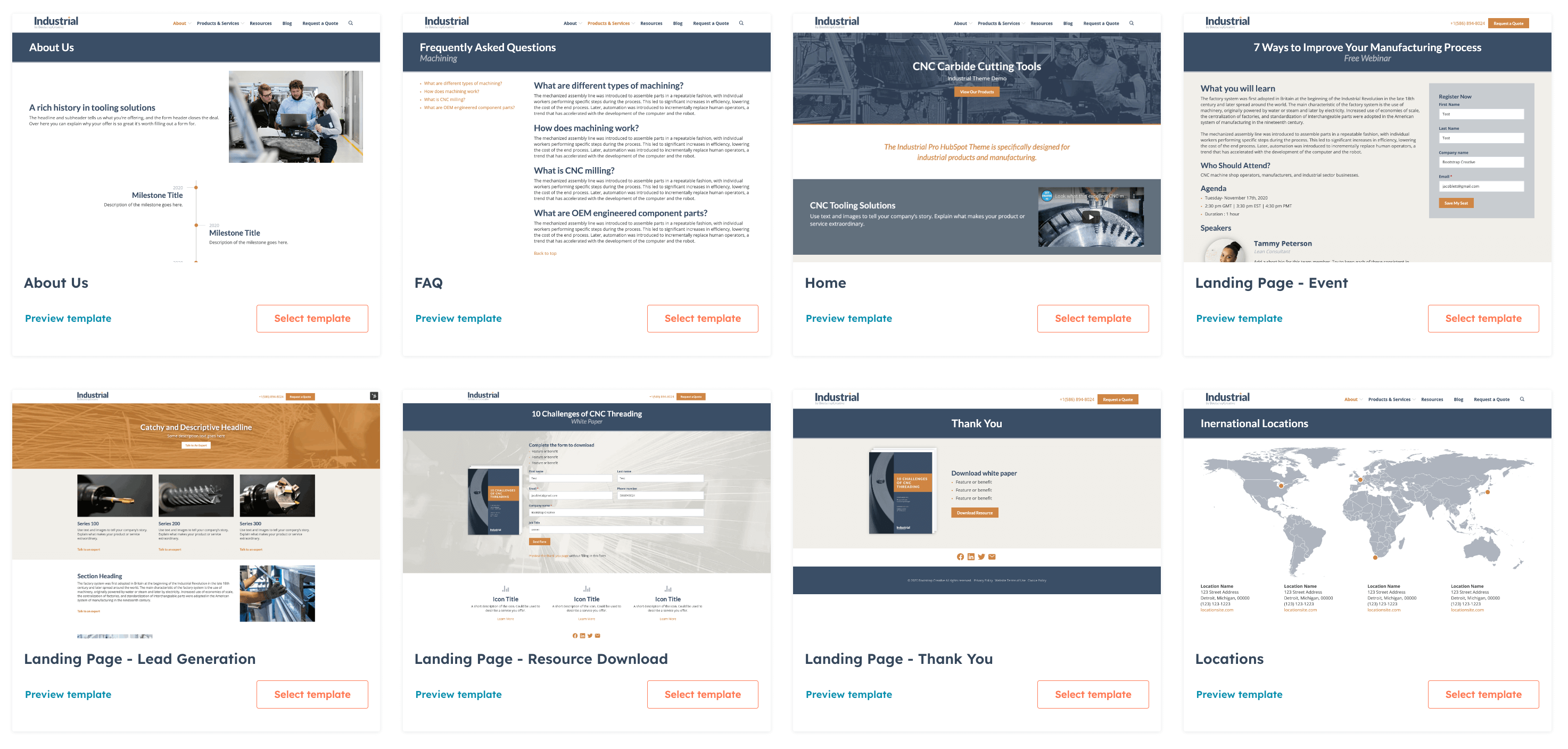
Industrial Web Design Templates Built for Manufacturers
Not ready for a custom agency build? Start with Industrial Pro, our $997 HubSpot theme for manufacturers, or browse our manufacturing website templates — built specifically for industrial companies, not adapted from generic themes.
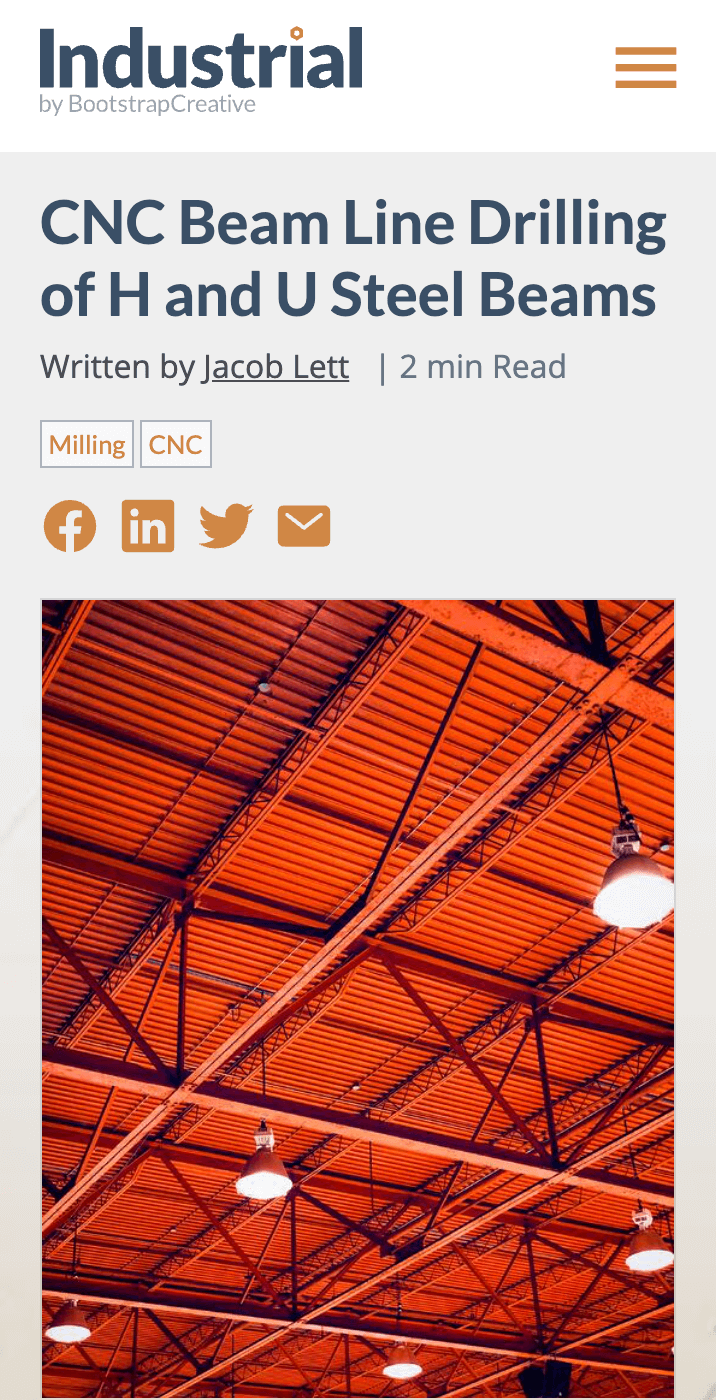
100% Mobile Responsive
What Industrial Buyers Expect from a Manufacturing Website
Engineers and procurement managers arrive at your site with specific questions: What processes do you run? What materials and tolerances? What certifications do you hold? If those answers aren't findable in under 30 seconds, they leave.
High-performing manufacturing websites include searchable product catalogs, downloadable spec sheets, RFQ forms with conditional logic, certifications and quality documentation, case studies by industry or process, and equipment lists that signal capacity. When built correctly, these elements don't just inform — they convert technical interest into quote requests.
SEO for Manufacturing Websites — Built Around How Buyers Actually Search
Buyers don't search for "manufacturing company." They search for "CNC machining Michigan," "stainless steel fabrication Ohio," or "ISO 9001 certified contract manufacturer." General SEO agencies optimize for traffic. We optimize for RFQ-intent traffic — the searches that end in a quote request, not a bounce.
Our industrial SEO work covers technical site structure, capabilities page optimization, process and material keyword targeting, and content that answers the technical questions engineers ask before they contact a supplier. Learn about our SEO services →
Mobile-Optimized Manufacturing Websites for On-the-Go Decision Makers
Engineers check supplier sites on their phones between jobs. Procurement managers review capabilities on tablets during site visits. A manufacturing website that loads slowly or breaks on mobile loses those buyers before they ever see your capabilities. Every site we build is fully responsive, fast-loading, and tested across devices.
Track RFQs and Lead Performance — Not Just Traffic
Sessions and pageviews don't pay for new equipment. We set up analytics reporting around the metrics that matter for manufacturers: RFQ form submissions, cost per lead from Google Ads, which capabilities pages are driving quote requests, and how leads move through your HubSpot pipeline. Monthly reporting keeps you connected to what's working without drowning in dashboards.
Manufacturing Website Design & Development Solutions
Looking for a manufacturing website builder built for industrial companies? Our solutions include purpose-built templates, custom HubSpot CMS development, and ongoing marketing support — all designed around the specific needs of B2B manufacturers. See pricing →
How Many RFQs Is Your Site Losing?
Take our free 2-minute scorecard and see exactly where engineers bounce before they ever request a quote.
10 Manufacturing Website Design Best Practices (2026)
A strong manufacturing website isn't just well-designed — it's engineered to convert. Here are the 10 practices that separate sites that generate RFQs from ones that just look good.
-
Lead with capabilities, not company history
Engineers arrive with a specific need. Your homepage and capabilities pages should answer "can they make what I need?" in the first 10 seconds. Process names, materials, tolerances, and certifications above the fold — company history in the footer.
-
Consistent brand representation
Logo, color scheme, typography, and messaging should match across your website, trade show materials, and email campaigns. Consistency builds recognition and trust with buyers evaluating multiple suppliers simultaneously.
-
Structure content for engineers AND search engines
Your capabilities pages need to be readable by engineers who scan for specs and by Google's crawler which reads text. Write process descriptions in plain text — not locked in PDFs or images — so both audiences can read them.
-
Use white space deliberately
Dense, cluttered pages read as untrustworthy. White space around spec data, certifications, and CTAs makes the page easier to scan and signals professionalism — which matters when a buyer is evaluating you as a long-term supplier.
-
Show your facility and equipment
High-quality photos and videos of your actual shop floor, machines, and team build credibility faster than any copywriting. Buyers evaluating remote suppliers need to see that you're real. A virtual plant tour can substitute for an in-person visit.
-
Match design to your actual industry niche
An aerospace precision machining site should feel different from a general fabrication site. The design signals should reflect the quality and precision standards of your specific niche — not a generic industrial template.
-
Navigation built for buyer journeys, not org charts
Organize your navigation around what buyers are looking for — processes, industries served, certifications, RFQ — not around your internal departments. A buyer looking for "aluminum CNC machining" shouldn't have to guess which menu item leads there.
-
RFQ forms with the right fields
A generic "contact us" form collects noise. A well-designed RFQ form collects what your estimating team actually needs: part quantity, material, tolerance requirements, delivery date, and file upload for drawings. Fewer but better-qualified leads is the goal. Check how your current RFQ form scores →
-
Mobile experience that works in the field
Responsive design isn't optional. Engineers and purchasing managers check supplier sites on phones during plant walks and between meetings. If your site is hard to use on mobile, you lose those buyers before they ever contact you.
-
Clear CTAs tied to specific actions
Every page should have one primary action: request a quote, download a spec sheet, view a case study. Competing CTAs or no CTA at all are equally damaging. "Contact Us" buried in the footer is not a CTA.
How Many RFQs Is Your Site Losing?
Take our free 2-minute scorecard and see exactly where engineers bounce before they ever request a quote.
How MFG Web Design Compares to Other Manufacturing Web Design Agencies
Most manufacturers evaluating a web design agency are choosing between three types of partner: a large full-service industrial agency, a boutique inbound shop, or a solo specialist. Each has a place. Large agencies like Gorilla 76, Industrial Strength Marketing, and Windmill Strategy fit manufacturers who need brand, content, trade show, and web under one roof and have $6,000–$20,000/month to spend. A solo specialist fits mid-market manufacturers who want the senior person doing the work — not an account manager relaying messages — at $1,500–$4,500/month.
MFG Web Design is the solo-specialist option: every project is run directly by Jake Lett, focused on RFQ conversion and Google Ads for industrial buyers, with no HubSpot partner commission bias. If you're still mapping the field, the guide below reviews the agencies worth evaluating and the questions to ask each one.
Compare Manufacturing Web Design Agencies Book a Free Consultation
Frequently Asked Questions
What features should a manufacturing website include?
A high-performing manufacturing website should include product catalogs, spec sheet downloads, RFQ forms, dealer locators, industry-specific solutions pages, case studies, certifications, and videos or virtual tours. These features help attract, qualify, and convert industrial buyers efficiently.
Why is SEO important for manufacturing websites?
SEO helps manufacturing websites get found by engineers, procurement teams, and B2B buyers searching for specific products or capabilities. With optimized content, metadata, and site structure, your site ranks higher and attracts more qualified RFQ traffic rather than generic visitors.
How can RFQ forms improve lead generation for manufacturers?
RFQ forms streamline the buying process by letting prospects share their requirements directly. When designed well — with fields for part quantity, material, tolerance, delivery date, and drawing uploads — they capture detailed project specs, reduce email back-and-forth, and help sales teams respond faster with accurate quotes.
Is HubSpot or WordPress better for a manufacturing website?
HubSpot CMS is better if you want your website natively integrated with your CRM, lead tracking, and email workflows from day one. WordPress offers more flexibility at a lower initial cost but requires separate CRM integration work. For manufacturers with active inside sales teams, HubSpot CMS typically delivers better long-term ROI. Learn about our HubSpot development services.
What does a manufacturing web design agency do?
A manufacturing web design agency designs, builds and optimizes websites for industrial buyers: capabilities and product pages, spec sheets, certifications, RFQ forms wired to your CRM, and SEO for industrial search terms. The goal is more qualified requests for quote, not just a better-looking site.
How much does a manufacturing website cost?
Pricing depends on how much of the work you do yourself and how much control your editors need. A DIY build with a purchased theme costs $100 to $1,000 per year, a DIY build with developer help $1,000 to $5,000, a customized template where we do most of the work $5,000 to $20,000+, and a fully custom design $10,000 to $100,000+. Sites can be built on WordPress, HubSpot, Shopify or another platform. Rigid templates that editors fill in cost less than full drag-and-drop page builders. See the pricing page for the full breakdown.