What Makes a Good Manufacturing Website Design? (7 Essential Features)
Published February 21, 2023 · Updated August 25, 2026
Written by: Jake Lett — Updated August 2026
Quick Answer: A good manufacturing website design communicates capabilities clearly, builds trust with real (not stock) proof, loads fast on mobile, ranks for the terms buyers actually search, makes requesting a quote the obvious next step, and connects to a CRM so every RFQ is tracked — not just received. Miss any one of these and the site quietly loses buyers who never tell you why they left.
An excellent manufacturing website design does more than describe your company — it answers a specific question a buyer already had before they searched, and makes it obvious what to do once they've found the answer. Most manufacturing sites fail not because they look bad, but because they were built to be looked at, not used. Here are the seven features that separate a website that generates RFQs from one that just sits there.
1. Capabilities Stated in the Buyer's Terms, Not Yours
"Precision manufacturing solutions" tells an engineer nothing. Tolerances, materials, certifications, equipment lists, and lot sizes tell them everything. A good capabilities page reads like a spec sheet a buyer can qualify you against in under a minute — not a mission statement.
2. Trust Signals That Are Actually Verifiable
Certifications (ISO, AS9100, ITAR), named client logos where you can share them, and specific case studies with real numbers do more to build credibility than any amount of marketing language. See how to write a case study that actually closes deals if this is the weak point on your current site.
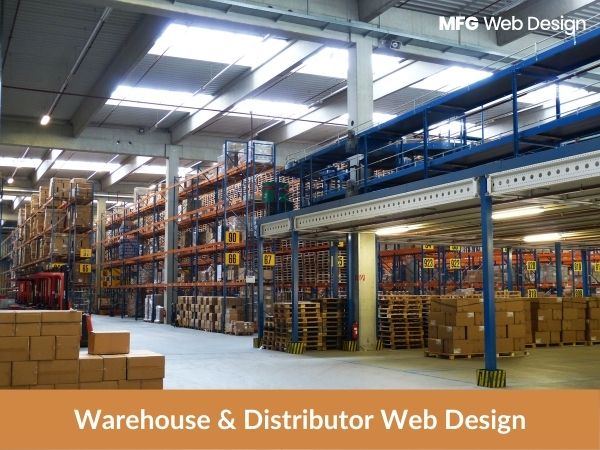
3. Real Photography, Not Stock Images
A buyer can spot a stock photo instantly, and it signals the opposite of what you're trying to prove. Photos of your actual floor, your actual equipment, and your actual team are a form of proof — generic industrial stock photography is a form of doubt.
4. Fast, and Fast on Mobile
Manufacturing sites tend to be heavy — spec sheets, CAD files, facility photos — which is exactly what slows a site down if it isn't optimized. A slow load costs you both search ranking and the visitor's patience before they've seen anything you built the page to show them.
5. Visibility Where Your Buyers Actually Search
None of the above matters if the site never gets found. Are you showing up for the terms a buyer actually searches — process, material, tolerance, and geography combined — or just for your own company name? This is what SEO and paid search are for: making sure the answer a buyer needs is findable, not just present.
6. A Fast, Obvious Path to Requesting a Quote
If a visitor spends five seconds on your homepage, will they know what to do next? Every page needs one clear next step — request a quote, download a spec sheet, call a person — and that step needs to be easy to find and fast to complete. A buried contact form is a lost RFQ, even on a site with great content.
7. A Website That Tracks What It Generates
A quote request that lands in a shared inbox and gets forgotten is worse than not having the form at all — it's a lead you paid for (in SEO time or ad spend) and then lost anyway. Connecting your forms to a CRM like HubSpot means every RFQ is tracked, assigned, and followed up on, and you can see which pages are actually producing pipeline versus which just get traffic.
Frequently Asked Questions
What's the single biggest mistake in manufacturing website design?
Treating the site as a digital brochure instead of a lead-generation tool. A brochure describes the company; a good manufacturing website is built around getting a specific visitor — an engineer or procurement manager — to a specific action, usually requesting a quote.
Does a manufacturing website need a blog?
Yes, if it answers the questions your buyers actually search — process comparisons, material selection, cost guides, capability explainers. A blog with generic company-culture posts does little; one built around buyer questions compounds into real organic search traffic over time.
How important is page speed for a manufacturing website?
Very. Manufacturing sites tend to be image- and PDF-heavy (spec sheets, CAD downloads, facility photos), which is exactly what causes slow load times if it isn't optimized. A slow site loses both search ranking and impatient visitors before they ever see your capabilities.
Summary
Your website is one continuous experiment in serving your buyers better — it needs to adapt as your capabilities, market, and competitors change, not stay frozen at launch. If you want a second opinion on where your current site is losing RFQs, book a free consultation and I'll walk through it with you directly.
Topic: Manufacturing Website Design Solution

Written by: Jake Lett
As a marketing consultant that specializes in industrial companies, I get to see patterns and strategies to make the most impact. Manufacturers often employ a lot of people. I take pride in knowing I am helping our American economy and improving the lives of families who build things with their hands and ingenuity.
Related Posts

10 Best Manufacturing Web Design Examples
The manufacturing website design examples in this post do a great job of answering these questions. It is obvious they invested in order to clearly communicate their business value and also help inform their buyers.
Read Article

List of Manufacturing Website Design Agencies in USA
Providing an affordable web design and development service to help industrial companies & manufacturers grow their business online. Get started now.
Read Article

How Much Does a Website Design Cost for a Manufacturing Company?
Want to know how much a website design costs for a manufacturing company? This blog post breaks down the factors that affect the cost and provides tips for getting the best price.
Read Article